Choosing between an iPhone and a Samsung Galaxy has never been simply about specifications.
Apple and Samsung approach smartphones differently. Apple emphasizes tight integration between hardware, software and its wider ecosystem, while Samsung gives users more customization, multitasking options and Android flexibility.
That makes the iPhone 18 vs Samsung Galaxy S26 comparison particularly interesting-but there is an important detail buyers should know in 2026.
The standard iPhone 18 has not been released yet.
Apple’s September 2026 launch introduced the iPhone 18 Pro and iPhone 18 Pro Max, while reports indicate that the standard iPhone 18 is part of Apple’s new split launch strategy and is expected in spring 2027.
The Galaxy S26, meanwhile, has already been available since March 2026. Samsung’s standard Galaxy S26 starts at $899.99 in the U.S. and comes with a 6.3-inch 120Hz Dynamic AMOLED 2X display, 12GB of RAM, a 50MP main camera and either 256GB or 512GB of storage.
So how should you approach this comparison?
If you’re shopping today, the Galaxy S26 is a real, available product, while the standard iPhone 18 remains a future model. That means anyone claiming to provide a definitive hands-on comparison between the two right now is likely mixing confirmed information with speculation.
Nevertheless, there is plenty we can examine: Apple’s current iPhone direction, Samsung’s confirmed Galaxy S26 hardware, expected positioning of the standard iPhone 18, ecosystem differences, cameras, battery expectations, software, pricing and the type of buyer each platform is designed to serve.
Let’s break it down.
iPhone 18 vs Galaxy S26: Quick Comparison
The following table separates what is confirmed from what remains unannounced.
| Feature | Standard iPhone 18 | Samsung Galaxy S26 |
|---|---|---|
| Availability | Expected spring 2027 | Available since March 2026 |
| Starting U.S. price | Not officially announced | $899.99 |
| Display | Not officially confirmed | 6.3-inch Dynamic AMOLED 2X |
| Refresh rate | Not officially confirmed | Up to 120Hz adaptive |
| Processor | Not officially confirmed | Snapdragon 8 Elite Gen 5 for Galaxy or Exynos 2600 depending on market |
| RAM | Not officially confirmed | 12GB |
| Main camera | Not officially confirmed | 50MP |
| Ultra-wide | Not officially confirmed | 12MP |
| Telephoto | Not officially confirmed | 10MP, 3x optical zoom |
| Front camera | Not officially confirmed | 12MP |
| Storage | Not officially confirmed | 256GB / 512GB |
| Water resistance | Not officially confirmed | IP68 |
| Operating system | Expected iOS 27-era software | Android 16 / One UI 8.5 |
| Wi-Fi | Not officially confirmed | Wi-Fi 7 |
| Bluetooth | Not officially confirmed | Bluetooth 6 |
| DeX | No | Yes |
| Expected launch | Spring 2027 | Already available |
Samsung’s specifications confirm the Galaxy S26’s 6.3-inch display, 12GB memory, camera system, storage options and connectivity features.
Because Apple has not yet announced the standard iPhone 18, its final specifications and price should not be treated as confirmed.
The Most Important Point: There Is No Standard iPhone 18 Yet
This is the first thing potential buyers need to understand.
For years, Apple typically introduced its standard iPhone alongside its Pro models in September.
In 2026, that changed.
Apple launched the iPhone 18 Pro and iPhone 18 Pro Max in September, but the regular iPhone 18 is expected to arrive separately in 2027. MacRumors reported that Apple’s split-launch strategy is expected to put the standard iPhone 18, iPhone 18e and a second-generation iPhone Air into the spring 2027 cycle.
That changes how you should interpret this comparison.
If you’re standing in a store today with a Galaxy S26 in one hand and asking, “Should I buy the iPhone 18 instead?”, there isn’t an iPhone 18 retail unit available to compare.
You have two practical choices:
Buy the Galaxy S26 now, or
Wait for the standard iPhone 18 to be officially announced and tested.
That distinction is particularly important if you’re spending a substantial amount of money on a smartphone.
Samsung Galaxy S26: What You Get Today
The Galaxy S26 is Samsung’s standard flagship rather than the larger S26+ or top-end S26 Ultra.
It combines a relatively compact 6.3-inch body with a 120Hz Dynamic AMOLED 2X display.
Samsung lists the phone at 167 grams and 7.2mm thick, making it a relatively light flagship.
Its hardware includes:
- 6.3-inch Dynamic AMOLED 2X display
- 120Hz adaptive refresh rate
- 50MP main camera
- 12MP ultra-wide camera
- 10MP 3x telephoto camera
- 12MP selfie camera
- 12GB RAM
- 256GB or 512GB storage
- Wi-Fi 7
- Bluetooth 6
- IP68 water and dust resistance
- 4,300mAh battery
- Samsung DeX
Samsung also states that the Galaxy S26 can record 8K video at 30 frames per second.
That is a remarkably complete specification sheet for a standard flagship.
Galaxy S26 Display vs the Future iPhone 18
The display is one area where Samsung’s approach is already clear.
The Galaxy S26 has a 6.3-inch Dynamic AMOLED 2X panel with an adaptive refresh rate of up to 120Hz and peak brightness of up to 2,600 nits under Samsung’s specified conditions.
A 120Hz display can make scrolling, animations and supported games appear significantly smoother than a traditional 60Hz panel.
This matters in everyday use.
Imagine scrolling through:
- TikTok
- Chrome
- News websites
- Long documents
The higher refresh rate makes movement feel more fluid.
The Galaxy S26 therefore already has a very strong display proposition.
What about the iPhone 18?
This is where we need to be disciplined.
Apple has not officially published the standard iPhone 18’s display specifications.
Reports about its future hardware exist, but those should not be confused with Apple’s confirmed specifications.
So if display quality is one of your most important buying criteria, the Galaxy S26 has a major advantage today simply because its specifications are known and the device can be tested.
Performance: Galaxy S26 vs What We Expect From iPhone 18
Samsung gives the Galaxy S26 either the Snapdragon 8 Elite Gen 5 for Galaxy or Exynos 2600 depending on market. Samsung specifically notes that the application processor can vary by device and market.
That regional difference is worth remembering.
Two people purchasing a Galaxy S26 in different countries may not necessarily receive exactly the same processor configuration.
The phone has 12GB of RAM, which provides plenty of headroom for multitasking and demanding applications.
Apple’s standard iPhone 18 processor has not been officially detailed.
However, Apple’s current 2026 Pro generation provides some clues about the company’s chip strategy.
The iPhone 18 Pro uses the A20 Pro, which Apple says includes a six-core CPU, seven-core GPU and dual 16-core Neural Engine. Apple also introduced a new vapor-chamber thermal design intended to improve sustained performance.
The standard iPhone 18 is expected to use a non-Pro version of Apple’s next-generation silicon, but its exact configuration should be treated as unconfirmed until Apple announces it.
What does this mean for buyers?
Don’t choose between these phones based solely on RAM or processor-core numbers.
Modern flagship processors are already extremely capable.
For most users, the more important question is:
Which phone handles your particular workload better?
For example:
A gamer should look at sustained performance and thermal behavior.
A photographer should examine image processing and camera controls.
A business user may care more about multitasking and desktop-style features.
A casual user may notice almost none of the difference between flagship processors.
Camera Comparison
The camera battle is one of the most interesting parts of the iPhone vs Samsung debate.
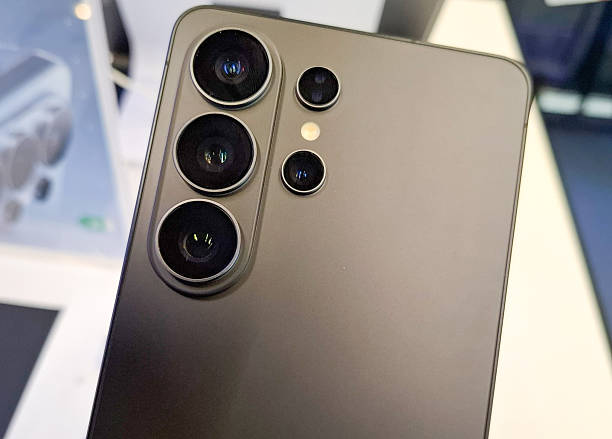
The Galaxy S26 has a three-camera rear system:
- 50MP wide
- 12MP ultra-wide
- 10MP telephoto with 3x optical zoom
It also supports up to 30x digital zoom and 8K video recording at 30fps.
This gives Samsung a versatile setup.
The dedicated telephoto camera is particularly useful.
Why optical zoom matters
Suppose you’re at a graduation ceremony.
The person you want to photograph is 20 or 30 meters away.
Instead of moving closer, you can use the telephoto lens.
The same principle applies to:
- Concerts
- Sporting events
- Travel
- Wildlife
- Architecture
- Portrait photography
The Galaxy S26’s 3x optical zoom is therefore more than a specification—it can change how you compose photographs.
What will the iPhone 18 offer?
We don’t yet know.
That’s the critical limitation.
Apple’s currently released iPhone 18 Pro provides a glimpse into the company’s photographic direction. The Pro model introduced a 48MP Fusion Main camera with variable aperture and new professional camera controls.
But those Pro features should not automatically be attributed to the standard iPhone 18.
Until Apple officially announces the regular model, claims about its exact camera hardware remain unconfirmed.
Samsung Galaxy S26 vs iPhone 18 for Video
Samsung already has a strong video specification sheet.
The Galaxy S26 supports 8K video at 30fps and 4K at 60fps.
That makes it appealing to people who want high-resolution video capture without buying a separate camera.
Apple’s iPhone lineup has historically been particularly strong in video processing and creator workflows, but the standard iPhone 18’s final video specifications aren’t confirmed yet.
This creates an interesting situation.
If you’re buying today specifically for video, the Galaxy S26 gives you known hardware.
If you’re willing to wait until 2027, it makes sense to see what Apple actually puts into the standard iPhone 18 before deciding.
Battery Life: Samsung Has the Numbers, Apple Doesn’t-Yet
Samsung lists the Galaxy S26 with a 4,300mAh typical battery capacity and up to 30 hours of video playback under Samsung’s testing conditions.
But comparing battery life solely by milliamp-hours would be misleading.
Apple and Samsung use different processors, operating systems, displays and power-management systems.
A 4,300mAh Android phone cannot be directly judged against a hypothetical iPhone battery by capacity alone.
What should you actually measure?
For real-world battery performance, look at:
- Screen-on time
- Cellular reception
- Video streaming
- Gaming
- Camera use
- Background applications
- Charging speed
- Standby drain
Until the standard iPhone 18 is tested independently, there is no reliable basis for declaring a battery winner.
Software: iOS vs One UI
This may ultimately be more important than the hardware.
The Galaxy S26 runs Android 16 with Samsung’s One UI 8.5. Samsung has built a heavily customized Android experience around multitasking, personalization and Galaxy AI features.
The iPhone 18 will run Apple’s iOS ecosystem.
Neither approach is universally better.
They simply prioritize different things.
Why iOS may appeal to you
The iPhone makes particular sense if you already use:
- Mac
- Apple Watch
- AirPods
- iPad
- iCloud
- FaceTime
- iMessage
The benefit isn’t necessarily one individual feature.
It’s the way the products communicate with one another.
For example, you could begin something on an iPhone and continue it on a Mac.
That continuity can save time if you’re already invested in Apple hardware.
Why Samsung may appeal to you
Samsung offers more Android flexibility.
You get:
- More customization
- Flexible file management
- Split-screen multitasking
- Samsung DeX
- Broad Android compatibility
- Integration with Windows PCs
- Greater control over default applications
Samsung confirms that the Galaxy S26 supports DeX, allowing compatible workflows to extend toward a desktop-style environment.
For someone who wants their phone to function more like a miniature computer, that’s a significant feature.
Galaxy S26 and Samsung DeX: The Underrated Advantage
One of the most interesting differences between Samsung and Apple is what happens when you connect the phone to a larger display.
Samsung DeX can provide a desktop-style interface.
Imagine you’re traveling for work.
You have:
- Your Galaxy S26
- A portable monitor
- A Bluetooth keyboard
- A mouse
With the appropriate setup, your phone can become the center of a more desktop-like workspace.
This doesn’t mean DeX replaces a full computer for everyone.
But for email, documents, web applications and other productivity tasks, it can be surprisingly useful.
If you’re a professional who travels frequently, this feature deserves more attention than a simple specification comparison would suggest.
Galaxy S26 vs iPhone 18 for Gaming
Both platforms have access to demanding mobile games.
Samsung’s 120Hz display can be particularly attractive to gamers because compatible games can take advantage of high refresh rates.
The Snapdragon 8 Elite Gen 5 for Galaxy is also designed for flagship-level performance, while some markets use Samsung’s Exynos 2600 configuration.
Apple’s silicon has also traditionally been extremely capable in demanding workloads.
But there is a more important question:
Which gaming ecosystem do you prefer?
Some games, accessories, subscriptions and controllers behave differently across Android and iOS.
If you already own a collection of paid iOS games, switching to Samsung may mean repurchasing some software.
Likewise, Android users with established Google Play libraries may prefer staying within Samsung’s ecosystem.
AI Features: Galaxy AI vs Apple’s Intelligence Strategy
AI-powered smartphone features are now a major part of flagship phones.
Samsung positions the Galaxy S26 as its most intuitive Galaxy AI phone, with features designed around tasks such as searching, photography and contextual assistance.
Apple is taking a somewhat different route with its newer Apple Intelligence and Siri strategy.
The 2026 iPhone 18 Pro launch introduced a deeper Siri AI experience, although feature availability can vary by region and language.
For the standard iPhone 18, however, Apple’s final feature set hasn’t been fully announced.
The practical lesson
Don’t buy a phone because its marketing says “AI.”
Instead, ask:
What will this feature actually save me time doing?
For example:
- Can it summarize a long email?
- Can it help edit a photograph?
- Can it translate a conversation?
- Can it search information across your device?
- Can it automate repetitive tasks?
A useful feature is more valuable than a long list of AI terminology.
Design and Durability
The Galaxy S26 weighs 167 grams and measures 7.2mm thick, according to Samsung’s specifications.
It also carries an IP68 rating for dust and water resistance under Samsung’s stated laboratory conditions. Samsung cautions that water and dust resistance can diminish with normal wear over time.
This is particularly relevant for people who use their phone outdoors.
Think about:
- Rain
- Dust
- Travel
- Outdoor photography
- Construction sites
- Sports
Durability isn’t glamorous, but it can affect the total cost of ownership.
A phone that survives everyday accidents can ultimately be cheaper than a theoretically cheaper device that requires frequent repairs.
Storage: 256GB or 512GB?
The Galaxy S26 comes in 256GB and 512GB configurations, depending on market.
That gives most buyers a sensible choice.
256GB
Suitable for:
- Social media
- Messaging
- Streaming
- Casual photography
- Everyday applications
512GB
Better for:
- Frequent video recording
- Large game libraries
- Offline movies
- Professional photography
- Heavy app usage
The future iPhone 18’s storage configurations haven’t been officially announced.
That means buyers shouldn’t rely on rumored capacities when calculating the total cost.
Price and Value
The Galaxy S26 starts at $899.99 for 256GB in the U.S. Samsung also lists a 512GB model at $1,099.99.
Apple hasn’t announced the standard iPhone 18’s price.
That makes price comparison impossible to complete accurately today.
This is actually important for buyers.
Suppose the future iPhone 18 launches at a similar price to previous standard iPhone models.
It could be positioned directly against the Galaxy S26.
But if Apple significantly changes its pricing strategy, the value equation could look very different.
Therefore, anyone publishing a definitive “iPhone 18 is cheaper/more expensive than Galaxy S26” claim before Apple’s official announcement is making an assumption.
Total Cost of Ownership: The Better Way to Compare Phones
The purchase price isn’t the whole story.
Consider:
Phone price + accessories + storage + insurance + repairs − resale value
For example, a buyer who keeps a phone for four years might care much more about long-term reliability and resale value than someone who changes phones every 12 months.
Also consider ecosystem costs.
An Apple user may already own:
- Apple Watch
- AirPods
- MacBook
A Samsung user may already own:
- Galaxy Watch
- Galaxy Buds
- Windows PC
- Samsung tablet
Switching ecosystems can create additional costs.
That’s why the “cheaper phone” isn’t always the cheaper choice.
iPhone 18 vs Galaxy S26: Which Is Better for Different Users?
| User Type | Better Fit to Consider | Why |
|---|---|---|
| Apple ecosystem user | iPhone 18 | Easier integration with existing Apple devices |
| Android user | Galaxy S26 | No ecosystem migration required |
| Mobile photographer | Wait for iPhone 18 testing / Galaxy S26 | iPhone 18 camera isn’t confirmed yet |
| Heavy multitasker | Galaxy S26 | One UI and DeX offer flexible workflows |
| Gamer | Galaxy S26 or iPhone 18 | Both should target flagship performance; iPhone needs testing |
| Travel user | Galaxy S26 | Compact body, IP68 and strong connectivity |
| Mac owner | iPhone 18 | Strong ecosystem integration |
| Windows user | Galaxy S26 | Android/Windows integration and DeX |
| Buyer who needs a phone now | Galaxy S26 | Available today |
| Buyer willing to wait | iPhone 18 | Can compare once official specifications are released |
What Makes This Comparison Different From Typical Phone Reviews?
There’s a trap in smartphone comparisons: treating specifications as if they automatically determine the winner.
They don’t.
Consider the camera.
A 50MP sensor versus a rumored 48MP sensor doesn’t tell you which photographs will look better.
Similarly, 12GB RAM versus an unspecified amount of RAM doesn’t automatically determine which phone will feel faster.
And battery capacity alone doesn’t tell you which phone lasts longer.
The better approach is to connect hardware to real-life use cases.
Example: A small-business owner
Imagine someone running a small online business.
They need to:
- Photograph products
- Answer WhatsApp messages
- Manage social media
- Edit short videos
- Check banking apps
- Respond to email
For this person, camera quality, battery endurance, multitasking and app availability matter more than benchmark scores.
Example: A student
A student may prioritize:
- Battery life
- Price
- Note-taking
- Social media
- Streaming
- Storage
- Durability
Paying for features they never use isn’t necessarily good value.
Example: A corporate professional
A professional may care about:
- Calendar
- Documents
- Video calls
- Security
- Multitasking
- Ecosystem compatibility
In this situation, the choice between iOS and Android may be more important than the camera megapixel count.
Should You Buy the Galaxy S26 Now or Wait for iPhone 18?
This is perhaps the most useful question.
Buy the Galaxy S26 now if:
You need a phone immediately.
The Galaxy S26 is already available, starts at $899.99 in the U.S. and has a complete, known specification set.
It also gives you:
- 120Hz AMOLED display
- 12GB RAM
- Triple-camera system
- 3x optical zoom
- IP68 protection
- Wi-Fi 7
- DeX
- 256GB or 512GB storage
Wait for the iPhone 18 if:
You aren’t in a hurry.
Apple hasn’t announced the standard iPhone 18 yet, so waiting gives you the opportunity to evaluate the actual hardware rather than relying on leaks.
This is particularly sensible if you are already comfortable with iOS.
Don’t wait if:
Your current phone is damaged, unreliable or no longer meets your needs.
There’s little benefit in postponing an important purchase for months solely because another model might eventually be better.
iPhone 18 vs Galaxy S26: Key Advantages
Galaxy S26 advantages
- Available now
- 120Hz Dynamic AMOLED 2X display
- 12GB RAM
- Dedicated 3x optical telephoto
- 8K video recording
- Samsung DeX
- Wi-Fi 7
- IP68 water and dust resistance
- 256GB and 512GB options
- Established Android ecosystem
Potential iPhone 18 advantages
These cannot yet be treated as final specifications, but Apple’s current product direction suggests areas to watch:
- iOS ecosystem integration
- Apple’s custom silicon
- Apple Intelligence features
- Tight integration with Mac and Apple Watch
- Apple’s video-processing ecosystem
- Potentially strong long-term software support
The key word is potential.
The standard iPhone 18 has not yet been officially announced.
Frequently Asked Questions
1. Is the iPhone 18 released?
No. As of September 18, 2026, Apple has released the iPhone 18 Pro and iPhone 18 Pro Max, but the standard iPhone 18 has not launched. Current reporting indicates the standard model is expected as part of Apple’s spring 2027 launch cycle.
2. Is the Samsung Galaxy S26 available now?
Yes. Samsung launched the Galaxy S26 series in early 2026, with general availability beginning March 11. The standard Galaxy S26 starts at $899.99 in the U.S.
3. Which has the better camera, iPhone 18 or Galaxy S26?
It is too early to make a definitive comparison because the standard iPhone 18 camera system hasn’t been officially announced or independently tested. The Galaxy S26 has a confirmed 50MP main camera, 12MP ultra-wide and 10MP 3x optical telephoto.
4. Does the Galaxy S26 have a 120Hz display?
Yes. Samsung lists a 6.3-inch Dynamic AMOLED 2X display with an adaptive refresh rate of 1–120Hz.
5. Does the Galaxy S26 have better zoom than the iPhone 18?
A direct comparison isn’t possible yet because Apple’s standard iPhone 18 telephoto specifications haven’t been confirmed. The Galaxy S26 has a dedicated 10MP telephoto camera with 3x optical zoom and up to 30x digital zoom.
6. Which phone is better for gaming?
Both are positioned as flagship smartphones, but the standard iPhone 18 has not yet been independently tested. The Galaxy S26 has a high-end Snapdragon 8 Elite Gen 5 for Galaxy or Exynos 2600 depending on market and a 120Hz display, making it a strong gaming option today.
7. Should I wait for the iPhone 18 or buy the Galaxy S26?
If you need a smartphone now, the Galaxy S26 is a known quantity and is already available. If your current phone works well and you prefer iOS, waiting for Apple’s official iPhone 18 announcement gives you the opportunity to compare confirmed specifications, pricing and independent reviews before spending your money.
Final Verdict: iPhone 18 vs Samsung Galaxy S26
The most honest answer to “iPhone 18 vs Samsung Galaxy S26: Which Is Better?” is that the comparison cannot yet produce a definitive winner.
That’s not because the phones are impossible to compare.
It’s because one of them-the standard iPhone 18-hasn’t been officially released.
The Galaxy S26 is already a fully defined product. It offers a 6.3-inch 120Hz AMOLED display, 12GB RAM, a versatile triple-camera system, 3x optical zoom, Wi-Fi 7, IP68 protection and Samsung DeX. Its $899.99 U.S. starting price also gives buyers a clear idea of the financial commitment.
Apple’s current iPhone 18 Pro shows where the company is heading, particularly with custom silicon, advanced photography, improved thermal performance and deeper intelligence features. But those Pro specifications should not automatically be assumed to appear on the cheaper standard iPhone 18.
So the decision comes down to timing and priorities.
Need a flagship phone today? The Galaxy S26 is a fully available option.
Already use Apple devices and aren’t in a hurry? Waiting for the standard iPhone 18 makes more sense.
Want Android flexibility, 120Hz AMOLED, optical zoom and DeX? The Galaxy S26 gives you those features today.
Want iOS and Apple’s ecosystem? Wait until the standard iPhone 18 is officially announced and independently reviewed.
Most importantly, don’t choose based on a specification sheet alone.
Choose based on how you actually use your phone.
A student, photographer, business owner, gamer and corporate professional can all have completely different definitions of the “better” smartphone.
And that’s ultimately the most useful conclusion from this comparison: the best phone is the one whose strengths match your everyday needs-not necessarily the one with the longest specification list.