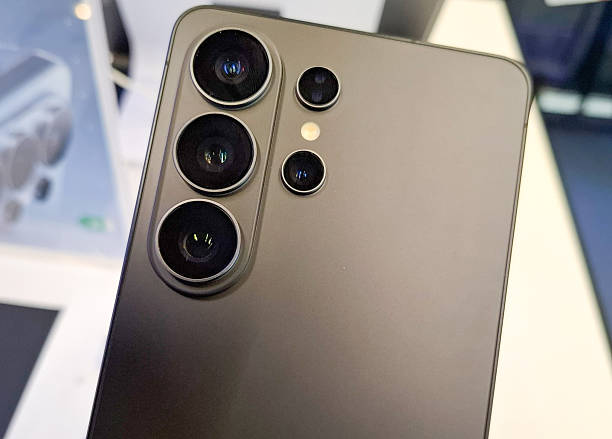
After the Iphone18 ProMax Performance text, now is time to look at The Galaxy S26 Ultra gaming test tells a more interesting story than simply looking at its processor specifications.
Samsung has equipped its latest Ultra flagship with the customized Snapdragon 8 Elite Gen 5 for Galaxy, a large 6.9-inch display, a redesigned vapor chamber and hardware designed to handle demanding workloads. Samsung claims the new processor delivers up to 24% higher GPU performance than the Galaxy S25 Ultra, while the redesigned cooling system provides 21% greater thermal performance.
But gaming performance isn’t determined by specifications alone.
A smartphone can deliver impressive benchmark scores for a few minutes and then reduce performance when heat builds up. For gamers, sustained frame rates, temperature, power efficiency and consistency can matter more than a single peak score.
That’s why this Galaxy S26 Ultra gaming review focuses on the things that actually affect long gaming sessions:
- FPS performance
- 1% and 5% lows
- Genshin Impact
- PUBG Mobile
- Diablo Immortal
- Thermal performance
- Battery consumption
- Sustained performance
- Display and refresh rate
- Gaming settings
- Real-world usability
So, is the Galaxy S26 Ultra a serious gaming phone in 2026, or is it simply a powerful flagship that happens to play games well?
Let’s test what the evidence tells us.
Galaxy S26 Ultra Gaming Performance at a Glance
| Category | Galaxy S26 Ultra |
|---|---|
| Processor | Snapdragon 8 Elite Gen 5 for Galaxy |
| GPU | Adreno GPU |
| Display | 6.9-inch flagship display |
| Refresh rate | Up to 120Hz |
| Battery | 5,000mAh |
| Cooling | Redesigned Vapor Chamber |
| Thermal improvement claimed by Samsung | 21% |
| GPU improvement claimed by Samsung | Up to 24% vs S25 Ultra |
| PUBG Mobile Smooth | 118.4 fps average in GameBench testing |
| PUBG Mobile HD | 89.1 fps average |
| PUBG Mobile Ultra HD | 59.7 fps average |
| Genshin Impact | 59.8 fps average at highest tested setting |
| Diablo Immortal | 60.7 fps maximum in PhoneArena testing |
| Tested surface temperature | Generally around/under 41°C in Notebookcheck testing |
Independent results vary according to game version, graphics settings, test duration, ambient temperature and software version. Samsung’s performance claims are also based on controlled comparisons rather than universal real-world gaming conditions.
Snapdragon 8 Elite Gen 5 for Galaxy: The Engine Behind the S26 Ultra
At the center of the Galaxy S26 Ultra is Qualcomm’s Snapdragon 8 Elite Gen 5 for Galaxy, customized for Samsung’s flagship.
Samsung reports:
- Up to 19% higher CPU performance
- Up to 24% higher GPU performance
- Up to 39% higher NPU performance
compared with the previous generation Galaxy S25 Ultra.
For gamers, the GPU improvement is particularly important.
The GPU handles much of the graphical workload involved in:
- 3D rendering
- Lighting
- Shadows
- Textures
- Particle effects
- High-resolution gaming
- Ray tracing
Samsung also highlights Vulkan optimization and hardware ray tracing support for compatible games.
But there is an important caveat.
A faster GPU doesn’t automatically mean every game runs at a higher frame rate.
Game developers can impose frame-rate limits, and some games are optimized differently for different hardware.
That’s why actual game testing is more informative than processor specifications alone.
The Redesigned Vapor Chamber Could Be More Important Than the Chip
One of the most interesting upgrades is hidden inside the phone.
Samsung has redesigned the Galaxy S26 Ultra’s vapor chamber to distribute heat more effectively.
Samsung says the new cooling system delivers 21% greater thermal performance compared with the Galaxy S25 Ultra. The company says the vapor chamber has a larger surface area and uses customized thermal interface material to spread heat more effectively.
Why does that matter?
Because gaming is a sustained workload.
Consider what happens during a one-hour Genshin Impact session:
- The CPU processes game logic.
- The GPU renders graphics.
- The display operates at high brightness.
- The network connection remains active.
- The battery continuously supplies power.
- Heat accumulates inside the device.
Eventually, the phone has to decide how aggressively it can continue operating.
A good thermal design gives the processor more room to maintain performance.
Why Sustained Gaming Performance Matters
Imagine two phones.
Phone A
- Higher peak benchmark score
- Excellent first 10 minutes
- Gets hot quickly
- Drops performance significantly
Phone B
- Slightly lower peak performance
- Better cooling
- Maintains stable frame rates
For someone playing for two hours, Phone B could provide the more enjoyable experience.
That’s why this Galaxy S26 Ultra gaming test pays particular attention to consistency rather than simply maximum FPS.
Galaxy S26 Ultra Genshin Impact Gaming Test
Genshin Impact remains one of the most useful stress tests for a flagship smartphone.
It can put significant pressure on the GPU and CPU while also creating substantial thermal load.
Independent Notebookcheck testing found the Galaxy S26 Ultra capable of approximately 59.8 fps average in Genshin Impact using its highest tested 120 fps configuration, with results ranging from 53 to 60 fps. At the lowest tested 120 fps configuration, it averaged 59.5 fps.
Those numbers tell us something important.
The game is effectively running around its 60-fps ceiling in that test.
The “120 fps” setting doesn’t mean Genshin actually produced 120 frames per second in this particular test.
This is an important distinction between:
display refresh rate, game setting and actual rendered frame rate.
Genshin Impact Results
| Genshin Impact Test | Result |
|---|---|
| Lowest tested 120-fps configuration | 59.5 fps average |
| Highest tested 120-fps configuration | 59.8 fps average |
| Highest configuration range | 53–60 fps |
| Display capability | Up to 120Hz |
| Overall observation | Near-60-fps sustained gameplay in the test |
The results show that the Galaxy S26 Ultra has enough performance to keep Genshin near the 60-fps range under the tested conditions.
For most players, that’s excellent.
But there is another side to the story.
Does the Galaxy S26 Ultra Run Genshin at 120 FPS?
Not in the independent test cited above.
This is where smartphone gaming reviews can become confusing.
The phone has a high-refresh display, and the game can expose a 120-fps option, but the actual measured performance was approximately 60 fps.
That doesn’t necessarily mean the hardware is weak.
It means the actual game workload and software configuration determine the achievable frame rate.
In other words:
120Hz display ≠ 120fps gameplay.
This is true for many smartphones.
Galaxy S26 Ultra PUBG Mobile Gaming Test
PUBG Mobile is another useful benchmark because it provides different combinations of graphics quality and frame-rate targets.
Notebookcheck’s GameBench testing produced the following results:
| PUBG Mobile Setting | Average FPS |
|---|---|
| Smooth | 118.4 fps |
| HD | 89.1 fps |
| Ultra HD | 59.7 fps |
The Smooth configuration operated close to 120 fps, while HD averaged around 89 fps and Ultra HD around 60 fps.
This demonstrates why gamers should decide whether they prioritize:
visual quality or frame-rate performance.
For competitive PUBG players, the Smooth/high-frame-rate configuration can make more sense.
For someone who cares more about graphics, a higher visual-quality setting may be preferable.
PUBG Mobile: Why 120 FPS Can Matter
In competitive shooters, higher frame rates can make movement and camera transitions appear smoother.
At approximately 120 fps, the phone is potentially delivering a new frame about every 8.3 milliseconds.
At 60 fps, that becomes approximately 16.7 milliseconds per frame.
That doesn’t mean a 120-fps player automatically has better results.
Your:
- Internet connection
- Ping
- Touch response
- Skill
- Device temperature
- Game settings
all matter.
But when the hardware and game support higher frame rates, the smoother presentation can be valuable.
Diablo Immortal Gaming Test
Diablo Immortal provides another useful test because it is a visually demanding action RPG.
PhoneArena’s testing showed the Galaxy S26 Ultra reaching approximately 60.7 fps maximum, with an average around the 60-fps target and extremely low FPS variance during its test.
The same test reported:
- Maximum FPS: 60.7
- Minimum FPS: 58.3
- 5% low: 58.7
- FPS variance: 0.1
- Maximum temperature: 34.4°C
- Average power: 1.96W
The test lasted five minutes, so it shouldn’t be treated as evidence of multi-hour sustained performance.
However, it does demonstrate excellent short-session consistency.
Gaming Performance Test Results Compared
| Game | Setting | Measured Result | Key Observation |
|---|---|---|---|
| Genshin Impact | Highest tested | 59.8 fps average | Near-60-fps performance |
| Genshin Impact | Lowest tested | 59.5 fps average | Very consistent |
| PUBG Mobile | Smooth | 118.4 fps | Near-120-fps gaming |
| PUBG Mobile | HD | 89.1 fps | High-frame-rate performance |
| PUBG Mobile | Ultra HD | 59.7 fps | Near-60-fps performance |
| Diablo Immortal | Default | ~60 fps | Very low variance |
These measurements come from different independent testing methods, so they should not be interpreted as a single standardized laboratory benchmark.
Thermal Performance: Does the Galaxy S26 Ultra Get Hot?
Every high-performance smartphone gets warm when pushed.
The question is whether the temperature becomes uncomfortable or forces significant performance reductions.
Notebookcheck found that the Galaxy S26 Ultra’s surface temperature generally remained below or around 41°C, with only some areas exceeding that level under load. The publication described the device as comparatively cool.
That’s encouraging.
However, Notebookcheck also reported that the phone reduced performance significantly under prolonged synthetic stress tests.
This is an important finding.
Cool Doesn’t Always Mean Fast
This is one of the most useful insights from the Galaxy S26 Ultra gaming test.
A phone can reduce its temperature by reducing its performance.
Imagine a car whose engine becomes hot.
One way to reduce the temperature is to reduce the engine’s workload.
Smartphones can do something conceptually similar.
If the processor reduces its operating frequency, it produces less heat.
Therefore:
Lower temperature does not automatically mean better thermal performance.
The ideal situation is:
- Low enough temperature
- High sustained performance
- Stable frame rates
- Efficient power consumption
The Galaxy S26 Ultra appears to strike a strong balance in actual games, although synthetic sustained-load testing indicates that performance can still be reduced under extreme conditions.
Galaxy S26 Ultra vs S25 Ultra Gaming Performance
Samsung’s new model isn’t simply about higher peak numbers.
PhoneArena’s gaming comparison between the S26 Ultra and S25 Ultra produced some interesting results.
In Genshin Impact, the S26 Ultra and S25 Ultra delivered very similar average performance, but the S26 Ultra had:
- Higher 5% lows
- Lower FPS variance
- Lower average power consumption
In the test:
| Metric | Galaxy S26 Ultra | Galaxy S25 Ultra |
|---|---|---|
| Genshin max FPS | 60.4 | 60.8 |
| Genshin min FPS | 52.5 | 48.7 |
| Genshin 5% low | 56.5 | 54.2 |
| FPS variance | 0.7 | 1.7 |
| Average power | 3.11W | 3.80W |
| Maximum temperature | 33.8°C | 33.4°C |
The S25 Ultra had a slightly higher peak and average in that short test, but the S26 Ultra showed better consistency and lower power consumption.
That is an excellent example of why simply asking “Which phone has more FPS?” isn’t enough.
Power Efficiency May Be the Real Upgrade
The S26 Ultra’s advantage in PhoneArena’s Genshin test wasn’t a dramatic FPS increase.
Instead, the phone used less power while maintaining similar performance.
That matters because lower power consumption can contribute to:
- Longer battery life
- Less heat generation
- More consistent performance
- Better efficiency during long gaming sessions
In the Genshin test, the S26 Ultra used approximately 3.11W average power, compared with 3.80W for the S25 Ultra.
That’s a difference of roughly 18%.
For gamers who play regularly, efficiency can be more valuable than a small increase in peak FPS.
Battery Capacity and Gaming
The Galaxy S26 Ultra has a 5,000mAh battery.
Samsung also supports Super Fast Charging 3.0, with the company stating that the phone can reach up to 75% charge in around 30 minutes under its specified conditions.
However, charging speed and gaming endurance are different measurements.
Gaming battery life depends on:
- Game
- Graphics settings
- FPS
- Screen brightness
- Wi-Fi or cellular connection
- Processor workload
- Temperature
- Background applications
Therefore, don’t interpret the 5,000mAh figure as a guaranteed number of gaming hours.
Why Gaming Settings Change Battery Life
Consider two PUBG configurations.
Configuration A
- Smooth graphics
- 120fps
- Medium brightness
Configuration B
- Ultra HD
- 60fps
- Maximum brightness
Configuration B may look better but can place a different workload on the GPU and display.
Configuration A may produce more frames but can also increase power consumption.
The best configuration depends on what you’re trying to achieve.
The 120Hz Display: Is It Enough for Gaming?
Yes, for most games.
A 120Hz panel can display up to 120 refreshes per second.
For games that support high frame rates, this provides a significant improvement over 60Hz.
However, some dedicated gaming phones now offer refresh rates higher than 120Hz.
That doesn’t automatically make them better gaming devices.
A 120Hz display combined with:
- Strong GPU performance
- Good touch response
- Stable FPS
- Good thermal management
can provide an excellent gaming experience.
Galaxy S26 Ultra Gaming and Ray Tracing
Samsung highlights hardware-accelerated ray tracing and Vulkan optimization as part of the S26 Ultra’s gaming capabilities.
Ray tracing can improve visual realism by calculating more sophisticated lighting, reflections and shadows.
But there’s a trade-off.
More advanced graphics can increase GPU workload.
For competitive gaming, you may prefer a higher frame rate.
For visually focused games, you may prefer richer graphics.
The important thing is having enough hardware headroom to choose between the two.
Is the Galaxy S26 Ultra a Good Phone for PUBG Mobile?
For PUBG Mobile, the S26 Ultra is particularly capable.
Independent testing recorded approximately:
118.4 fps on Smooth
and
89.1 fps on HD
with Ultra HD around
59.7 fps.
This gives players flexibility.
If you’re a competitive player, prioritize the higher-frame-rate configuration.
If you’re playing casually and want more detailed graphics, choose the higher visual-quality setting.
Is the Galaxy S26 Ultra Good for Genshin Impact?
Yes.
The independent testing shows approximately 59.8 fps at the highest tested configuration.
That makes the phone well suited to Genshin’s demanding graphics workload.
However, Genshin can still produce substantial heat and power consumption during extended sessions.
For long sessions, you may want to reduce certain settings slightly rather than insisting on maximum graphics everywhere.
Galaxy S26 Ultra Gaming for Long Sessions
This is where things become more complicated.
Short tests are useful for establishing peak performance.
Long sessions are better for understanding thermal behavior.
Samsung’s redesigned vapor chamber is intended specifically to improve heat dissipation during demanding workloads.
Yet independent stress testing indicates that the S26 Ultra can still reduce performance under sustained synthetic load.
That isn’t necessarily a major problem for gaming.
Synthetic stress tests can place a more continuous and extreme load on the processor than many real games.
The key question is whether actual games maintain the frame rate you want.
Based on the available game testing, the answer is generally yes.
How to Get Better Gaming Performance on the Galaxy S26 Ultra
Even with flagship hardware, configuration matters.
1. Use Game Booster
Samsung’s gaming software provides tools designed to optimize gaming and manage performance.
Take some time to understand its settings rather than simply selecting maximum performance.
2. Choose FPS before graphics
For competitive games, prioritize frame-rate stability.
For story-driven games, you may prefer maximum visual quality.
3. Keep the phone cool
Avoid:
- Direct sunlight
- Hot cars
- Thick heat-trapping surfaces
- Gaming under blankets
- Extremely hot environments
Ambient temperature has a significant effect on thermal performance.
4. Use a reliable network
For online games, stable latency can matter as much as FPS.
5. Don’t automatically use maximum brightness
High brightness increases power consumption.
Use the lowest comfortable brightness level.
Should You Use a Cooling Fan?
For normal gaming, you may not need one.
For several-hour sessions, an external cooler can potentially reduce surface temperatures and provide additional thermal headroom.
However, cooling accessories vary substantially in quality.
A cooler that simply blows air around the phone is different from one designed to transfer heat directly from the phone’s back.
If you buy one, make sure it is compatible with your case and phone setup.
Galaxy S26 Ultra vs Dedicated Gaming Phones
The Galaxy S26 Ultra is an interesting hybrid.
It isn’t marketed as a dedicated gaming phone.
Instead, it combines gaming performance with:
- Premium cameras
- S Pen
- Productivity features
- Samsung ecosystem
- Long-term software support
- High-end display
- Mainstream design
Dedicated gaming phones may offer:
- Physical shoulder triggers
- Active cooling
- Higher refresh rates
- More gaming customization
- Gaming-oriented accessories
Therefore, the S26 Ultra is arguably more attractive to someone who wants one premium smartphone for everything.
Galaxy S26 Ultra vs Gaming Phone: Quick Comparison
| Feature | Galaxy S26 Ultra | Dedicated Gaming Phone |
|---|---|---|
| Gaming performance | Excellent | Excellent |
| Sustained performance | Strong | Often optimized specifically for gaming |
| Display | 120Hz-class flagship | Often 144Hz+ |
| Physical gaming triggers | No | Often available |
| Active fan cooling | No internal gaming fan | Some models offer it |
| Camera system | High-end | Usually secondary |
| Productivity | Excellent | Good to excellent |
| S Pen | Yes | Usually no |
| Software ecosystem | Extensive | Gaming-focused |
| Everyday usability | Excellent | Depends on model |
| Design | Mainstream premium | Gaming-oriented |
Is the Galaxy S26 Ultra Better Than the iPhone for Gaming?
This depends heavily on the game and platform.
The Galaxy S26 Ultra has several gaming advantages:
- High-refresh Android gaming
- Excellent GPU performance
- Vulkan optimization
- Ray tracing
- Extensive game customization
- High frame rates in supported games
The iPhone has its own strengths:
- Powerful Apple silicon
- Strong game optimization
- Consistent hardware configurations
- Excellent developer support
Rather than asking which is universally better, compare the exact games you play.
A PUBG Mobile player may have different priorities from someone who mainly plays Genshin Impact or Diablo Immortal.
Gaming Performance Isn’t Just About FPS
This is perhaps the biggest lesson from the Galaxy S26 Ultra testing.
A good gaming experience requires several pieces to work together:
GPU + CPU + thermal management + display + touch response + software + network + battery
If one component becomes a bottleneck, overall performance can suffer.
For example:
A phone can produce 120fps but still feel poor if its network latency is unstable.
A phone can have excellent average FPS but feel inconsistent if frame-time spikes are frequent.
A phone can remain cool because it reduces performance aggressively.
That’s why a complete gaming review needs more than one number.
Who Should Buy the Galaxy S26 Ultra for Gaming?
The S26 Ultra makes the most sense for gamers who also want a premium everyday smartphone.
It’s particularly suitable if you:
- Play demanding games regularly
- Want high frame rates
- Care about camera quality
- Use your phone for work
- Want an S Pen
- Prefer Android
- Want strong battery and charging performance
- Don’t want a specialized gaming-phone design
Who Should Buy a Dedicated Gaming Phone Instead?
A dedicated gaming phone may be more suitable if you:
- Game for several hours every day
- Want physical shoulder controls
- Prefer aggressive active cooling
- Want a gaming-first interface
- Prioritize extremely high refresh rates
- Use gaming accessories extensively
The Galaxy S26 Ultra is powerful enough for serious mobile gaming, but it isn’t designed around gaming alone.
Galaxy S26 Ultra Gaming Test: Pros and Cons
| Pros | Cons |
|---|---|
| Snapdragon 8 Elite Gen 5 for Galaxy | Sustained synthetic loads can still trigger performance reductions |
| Excellent GPU performance | No dedicated physical gaming triggers |
| Strong 120Hz gaming experience | Dedicated gaming phones may offer more aggressive cooling |
| Excellent PUBG performance | Maximum settings increase heat and battery consumption |
| Near-60-fps Genshin performance in independent tests | 120Hz display doesn’t mean every game runs at 120fps |
| Improved thermal design | 5,000mAh battery isn’t the largest in the gaming-phone market |
| Strong power efficiency in some tests | Premium pricing |
| Excellent everyday smartphone | Gaming results vary by software and game version |
Frequently Asked Questions
1. Is the Galaxy S26 Ultra good for gaming?
Yes. Independent testing shows strong performance in demanding games. PUBG Mobile reached an average of 118.4 fps in Smooth mode, while Genshin Impact averaged about 59.8 fps in the highest tested configuration.
2. Can the Galaxy S26 Ultra run PUBG Mobile at 120 FPS?
In independent GameBench testing, PUBG Mobile averaged approximately 118.4 fps using the Smooth configuration. Actual performance depends on the game version, settings and software updates.
3. Can the Galaxy S26 Ultra run Genshin Impact at 120 FPS?
The phone has a 120Hz display and the tested Genshin configuration exposed a 120-fps setting, but independent testing measured approximately 59.8 fps at the highest tested setting. A 120Hz display does not guarantee 120fps gameplay.
4. Does the Galaxy S26 Ultra overheat during gaming?
The phone becomes warm during demanding workloads, but Notebookcheck found its surface temperatures generally remained below or around 41°C, with only limited areas exceeding that level. Samsung also redesigned the vapor chamber to improve heat dissipation.
5. Is the Galaxy S26 Ultra better than the S25 Ultra for gaming?
The answer depends on the game. PhoneArena testing found similar short-session FPS in Genshin Impact, but the S26 Ultra showed better 5% lows, lower frame-rate variance and lower power consumption. Samsung also reports a 24% GPU improvement and 21% better thermal performance compared with the previous generation.
6. Is the Galaxy S26 Ultra suitable for long gaming sessions?
Yes, but expectations should remain realistic. Its redesigned cooling system is specifically intended for sustained workloads. However, independent stress testing shows that the phone can still reduce performance under extreme continuous loads. Actual game performance is generally strong, but ambient temperature and game settings can significantly affect results.
7. Is the Galaxy S26 Ultra better than a dedicated gaming phone?
Not necessarily. It offers excellent gaming performance while also providing a premium camera system, productivity features and the S Pen. Dedicated gaming phones can offer physical controls, more aggressive cooling and gaming-specific features that Samsung’s flagship doesn’t provide.
Final Verdict: Galaxy S26 Ultra Gaming Performance
The Galaxy S26 Ultra is a genuinely powerful gaming smartphone, even though Samsung positions it as an all-purpose flagship rather than a dedicated gaming device.
The raw hardware is impressive.
The customized Snapdragon 8 Elite Gen 5 for Galaxy provides substantial processing and graphics performance, while Samsung’s redesigned vapor chamber is intended to keep the phone performing consistently under demanding workloads. Samsung reports up to a 24% GPU improvement and 21% better thermal performance compared with the previous generation.
Independent gaming tests largely support the idea that the phone is extremely capable.
PUBG Mobile reached approximately 118.4 fps in Smooth mode, while Genshin Impact averaged around 59.8 fps in its highest tested configuration. Diablo Immortal also stayed around 60 fps with very low frame-rate variance in PhoneArena’s test.
But the most interesting finding isn’t necessarily the maximum FPS.
It’s efficiency and consistency.
In PhoneArena’s Genshin test, the S26 Ultra delivered similar overall frame-rate performance to the S25 Ultra while recording better 5% lows, lower frame-rate variance and lower average power consumption.
That is the kind of improvement that matters during actual gaming.
There is, however, one important caveat.
Independent stress testing shows that the S26 Ultra can still reduce performance under prolonged extreme workloads. So while the phone’s cooling system is substantially improved, it doesn’t make thermal throttling physically impossible.
For most gamers, that shouldn’t be a deal-breaker.
If you primarily play PUBG Mobile, Call of Duty Mobile, Genshin Impact, Diablo Immortal or other demanding Android games, the Galaxy S26 Ultra has more than enough power for a high-quality experience.
The bigger question is whether you need a dedicated gaming phone.
If you want physical shoulder controls, active cooling and an extremely gaming-focused design, a specialized device may be more appropriate.
But if you want a phone that can handle serious gaming while also serving as your camera, work device, entertainment system and productivity machine, the Galaxy S26 Ultra is a particularly versatile choice.
The most important takeaway from this gaming test is simple:
Don’t judge the Galaxy S26 Ultra only by its benchmark score. Look at sustained FPS, frame-time consistency, temperature and power consumption together.
Those measurements provide a much clearer picture of what you can expect when the gaming session lasts longer than a few minutes.
And by that standard, the Galaxy S26 Ultra demonstrates that Samsung has built one of the most capable mainstream Android gaming phones of 2026.